
FUE Hair Transplantation.
Follicular Unit Extraction — individually planned, doctor-led assessment for international patients.
A technique for individual restoration.
FUE (Follicular Unit Extraction) is a widely adopted modern approach to hair restoration. Individual follicular units are harvested from the donor area and transplanted with precision to areas of hair loss. Each treatment plan is developed individually — no two assessments are the same.
-
Individual hairline planning
Hairline design takes into account facial proportions, natural hair growth direction, characteristics of the donor area, and long-term considerations including natural ageing. There is no standard template.
-
Donor area evaluation
The density, quality, and availability of the donor zone determines the scope of any potential treatment. This is assessed individually during the medical consultation.
-
Precision and natural outcome
The goal is a natural, proportionate result. Expected outcomes depend on individual hair characteristics, extent of hair loss, age, and the body's individual response to the procedure.
After the procedure.
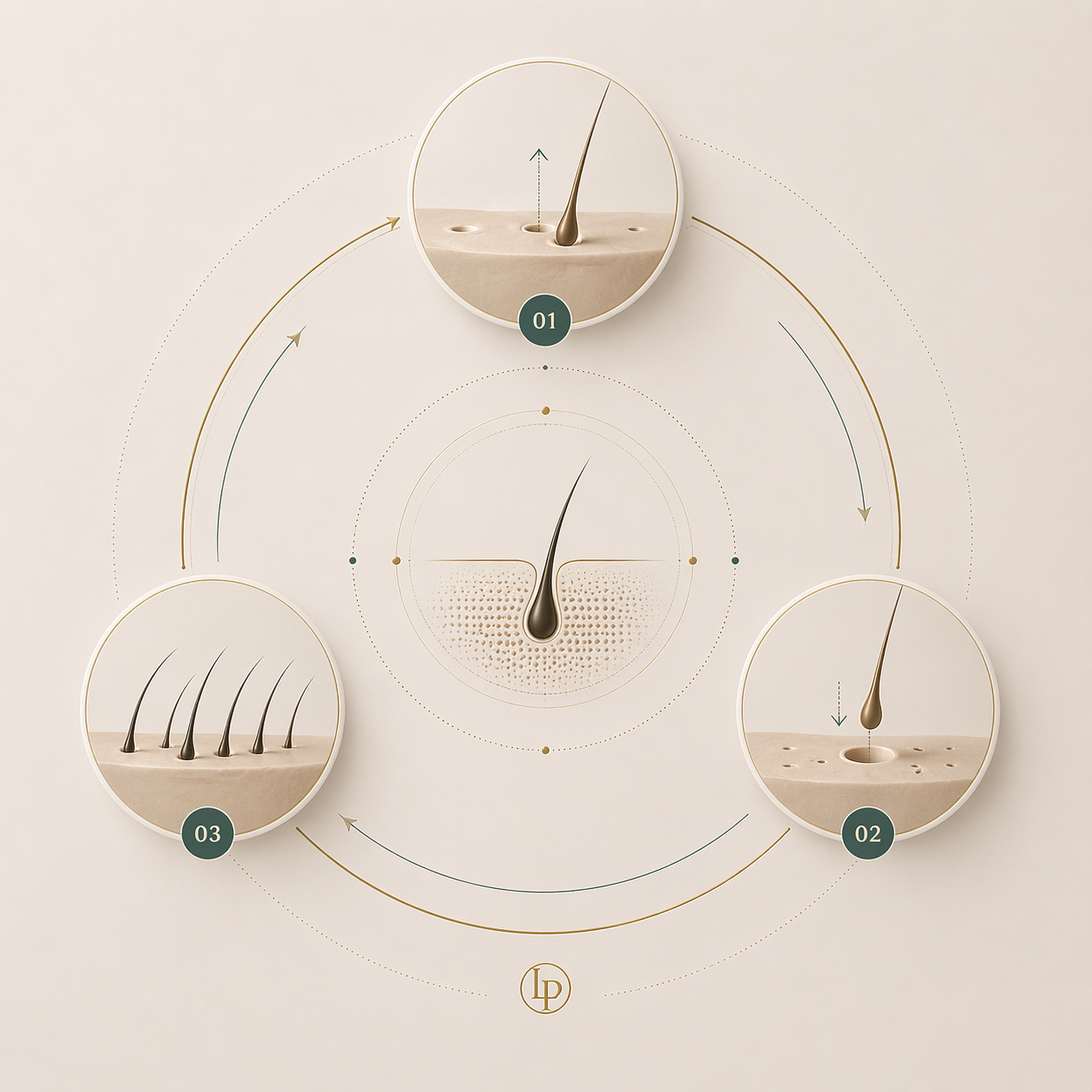
Recovery from FUE varies between individuals. The clinic provides detailed aftercare instructions — this is a general overview only.
- 01
First days
Redness, minor swelling, and scabbing in the recipient and donor areas are common. Rest is recommended. Specific care instructions are provided by the clinic.
- 02
Weeks 2–4
Transplanted hair typically sheds during this period. This is a normal part of the process and does not indicate failure.
- 03
Months 3–6
New hair growth begins. Progress varies between patients. The full result is not visible at this stage.
- 04
Month 12+
The majority of transplanted hairs have grown in. Final results depend on individual factors. Results vary between patients. No specific outcome is guaranteed.
Treatment suitability and expected outcomes can only be confirmed through direct medical consultation. This page does not provide a diagnosis, treatment recommendation, or specific outcome prediction. Results vary between patients.
Hair transplant questions.
Am I a suitable candidate for a hair transplant?
Suitability depends on a number of individual factors — including donor hair density, extent and pattern of hair loss, age, and overall health. These can only be assessed by a medical specialist during consultation. An initial remote assessment is the first step.
How many grafts will I need?
The number of grafts required varies significantly between individuals. It depends on the area to be treated, the desired outcome, and the density available in the donor zone. A specific estimate can only be given after direct clinical assessment.
What is the recovery period like?
Recovery varies between individuals. Most patients experience some redness, swelling, and minor scabbing in the first weeks. Transplanted hair typically sheds within the first few weeks before regrowing gradually over months. A detailed recovery protocol is provided by the clinic.
Will the results look natural?
The goal of treatment planning is a proportionate, natural-looking result. Outcomes depend on individual hair characteristics, the extent of hair loss, age, and the body's response to treatment. Results vary between patients. No specific outcome can be guaranteed.