
Density, without surgery.
Medical-grade scalp tattoo that simulates short-shaved hair follicles — for density, hairline definition, or scar camouflage.
A pigment-based solution, planned medically.
Scalp micropigmentation (SMP) deposits microscopic pigment dots into the upper dermis to replicate the appearance of short-shaved hair follicles. It is non-surgical, performed over multiple sessions, and planned individually per patient — hairline, density, and color are matched to skin tone and remaining hair.
-
Density illusion
For patients with diffuse thinning, SMP adds visual density by darkening the scalp between remaining hairs. Not a replacement for transplantation — an alternative or complement for cases where density alone is the concern.
-
Shaved-look definition
For advanced hair loss without viable donor capacity, SMP can recreate the visual appearance of a closely shaved scalp — a well-groomed, intentional look rather than baldness.
-
Scar camouflage
SMP can reduce the visibility of scars from previous hair transplants, accidents, or surgery by matching pigment to surrounding scalp tone. Suitability depends on scar characteristics.
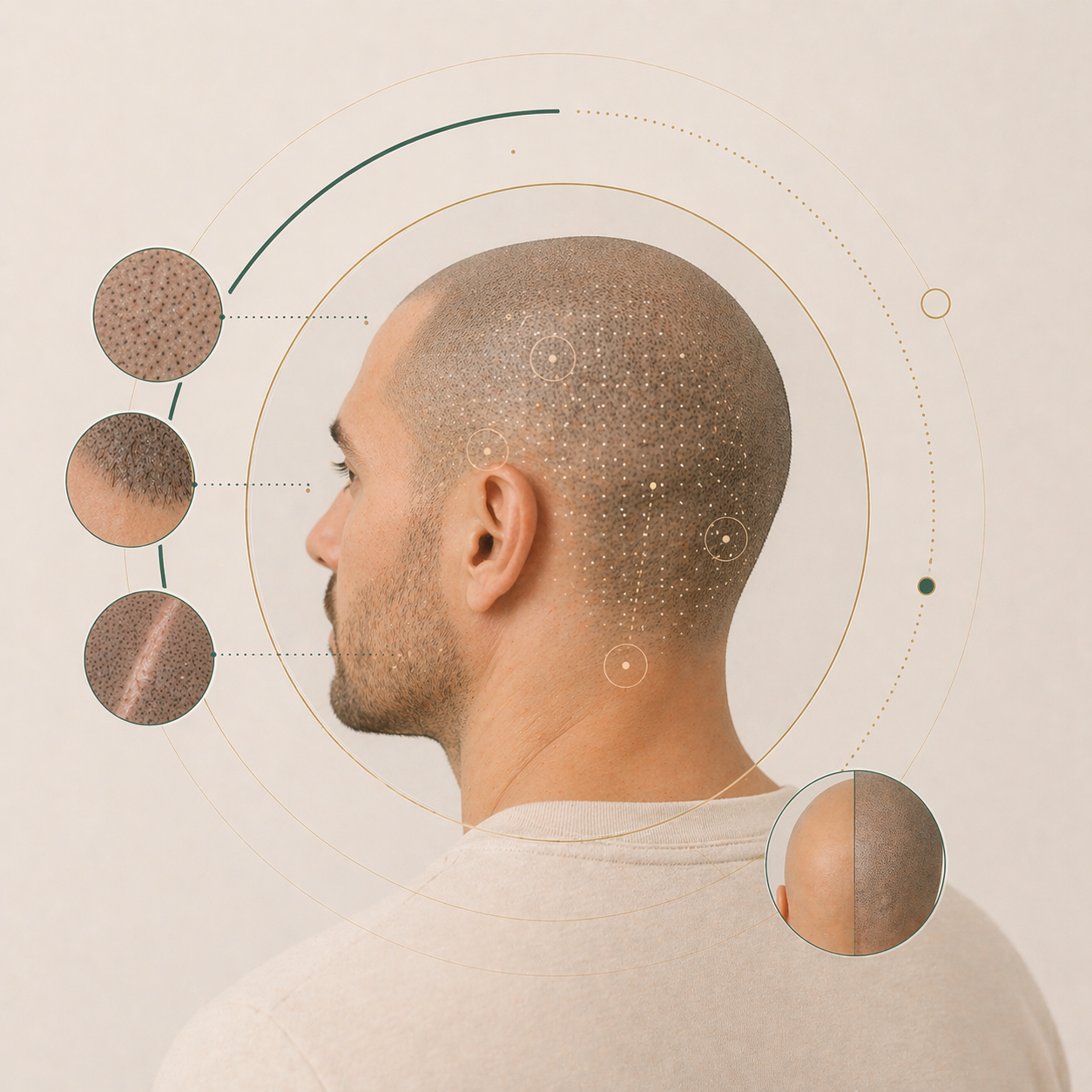
SMP is a medical procedure, not cosmetic tattooing.
SMP requires specialised training, medical-grade pigments, and a plan matched to skin type, hair color, age-related fading, and patient lifestyle. A consultation is required to assess suitability and define realistic expectations.
Multiple sessions
SMP is typically performed across 2–3 sessions, a few weeks apart, to build up density and allow healing between layers.
Fading over time
Pigment fades gradually (usually 4–8 years) depending on skin type, sun exposure, and pigment used. Touch-up sessions maintain the result.
Not all skin types
Certain skin conditions, sensitivities, or medical situations may make SMP unsuitable. Medical review is required before treatment.
Combinable
SMP can be planned alongside hair transplantation to enhance visual density in recipient areas — staging depends on individual case.
Scalp micropigmentation suitability can only be confirmed through direct medical consultation. Results, pigment longevity, and aesthetic outcome vary between patients. This page does not provide a diagnosis, treatment recommendation, or specific outcome prediction. Treatment may not be appropriate for all cases.